
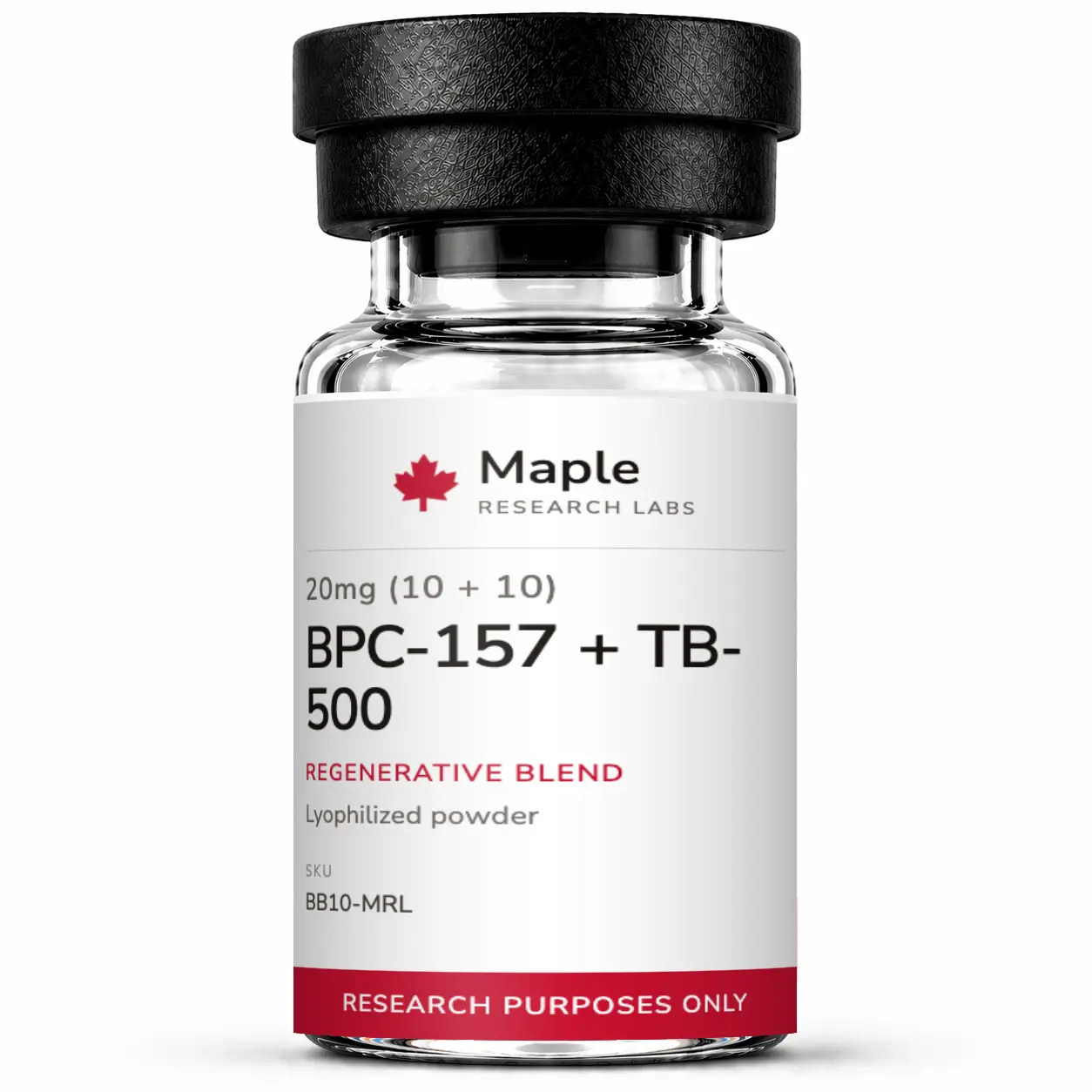
BPC-157 TB-500 blend from Maple Research Labs combines two research peptides in a single vial with verified 99%+ purity and third-party COA testing.
Compound: BPC-157 + TB-500 Blend
CAS Number: 137525-51-0 / 77591-33-4
Molecular Formula: Blend (10mg + 10mg)
Purity: 99.86% (HPLC-UV verified)
Third-Party Testing: Testides Analytical (independent third-party lab)
COA Download: View Full COA (PDF)
Report: DBAV-BPCTB-20-062226
Lot Number: 5819
Source: Research grade, third-party tested
Shipping: Same-day shipping from our US facility
BPC-157 TB-500 blend: a combined research peptide formulation containing both BPC-157 (Body Protection Compound-157) and TB-500 (Thymosin Beta-4 fragment) in a single vial. Available from Maple Research Labs with greater than 99%+ HPLC-verified purity for each component and batch-specific COA.
Product Specifications
- Components: BPC-157 + TB-500 (Thymosin Beta-4 fragment)
- BPC-157 CAS: 137525-51-0
- Purity: >99%+ each component (HPLC verified)
- Form: Lyophilized powder blend
BPC-157 TB-500 Blend Research Summary
The BPC-157 TB-500 blend product combines two of the most extensively studied tissue repair research peptides into a single formulation. BPC-157 is a gastric juice-derived pentadecapeptide investigated for its effects on tissue repair signaling pathways including NO modulation, VEGF upregulation, and FAK-paxillin signaling. TB-500 is a synthetic fragment of Thymosin Beta-4 studied for its interactions with the actin cytoskeleton, cell migration, and angiogenesis in preclinical models.
The rationale for combining these peptides in research settings is based on their complementary mechanisms of action. Published literature on each compound individually suggests they engage different aspects of tissue repair signaling: BPC-157 primarily through growth factor receptor modulation and NO system interactions, and TB-500 through actin sequestration and cytoskeletal dynamics that promote cell migration.
Component Mechanisms
BPC-157 (15 amino acids, MW 1419.53 g/mol) has been the subject of over 100 published preclinical studies. Research has documented effects in tendon, ligament, muscle, and gastrointestinal injury models in rodents. Key signaling pathways investigated include the NO system, VEGF/VEGFR2 axis, EGF receptor signaling, and the FAK-paxillin cascade associated with cell adhesion and migration.
TB-500 (active fragment of Thymosin Beta-4, 43 amino acids) acts primarily through G-actin sequestration, regulating cytoskeletal dynamics essential for cell motility. The LKKTETQ sequence within TB-500 is the identified actin-binding domain. Published research has examined TB-500 in wound healing, cardiac tissue, and inflammatory response models.
While individual compound research is extensive, published studies specifically examining the BPC-157/TB-500 combination are more limited. The combined formulation enables researchers to study potential interactions between these two mechanistically distinct tissue repair peptides in a controlled experimental setting.
Preclinical Context
Both component peptides have been extensively characterized individually in preclinical models. BPC-157 has the larger published literature base with over 100 peer-reviewed studies. Thymosin Beta-4 and its fragments have similarly been studied across multiple tissue types and injury models. The blend format reduces the number of compounds researchers need to prepare and administer in combination studies.
All findings referenced are from preclinical research on individual components. No therapeutic claims are made.
References
- Sikiric P, et al. Brain-gut Axis and Pentadecapeptide BPC 157. Curr Neuropharmacol. 2016 (PubMed – BPC-157)
- Goldstein AL, et al. Thymosin beta4: a multi-functional regenerative peptide. Expert Opin Biol Ther. 2012 (PubMed – TB-500)
BPC-157 TB-500 Blend Quality Assurance
Verified products of BPC-157 TB-500 blend from Maple Research Labs undergoes independent third-party HPLC analysis confirming purity exceeding 99%+ for each component. Each order includes a batch-specific COA verifying both BPC-157 and TB-500 identity, purity, and correct formulation ratio. Dual-peptide blends require component-specific analytical methods, addressed in our quality protocols for verified products.
Storage and Handling
Store lyophilized at -20C. Reconstituted at 2-8C, use within 21 days. Avoid freeze-thaw cycles and light.
Shipping
Ships Same-day shipping from our US facility. Temperature-controlled packaging included.
Certificate of Analysis (COA)
| Testing Laboratory | Testides (testides.com) |
| Report Number | DBAV-BPCTB-20-062226 |
| Lot Number | 5819 |
| Purity (HPLC-UV) | 99.86% |
| Content / Fill Accuracy | 21.34mg measured / 20.00mg expected (106.7%) |
| Date Tested | July 2, 2026 |
| Download COA | Download Full COA (PDF) |
For research purposes only. Not for human consumption. Not for diagnostic or therapeutic use.
Related Research Articles
- BPC-157 vs TB-500: Research Comparison
- TB-500 vs BPC-157/TB-500 Blend: Research Comparison
- Understanding Peptide Purity and Documentation
- Certificates of Analysis (COA) Documentation
- Browse All Research Peptides
Frequently Asked Questions
What compounds are in the BPC-157 + TB-500 Blend?
This blend contains BPC-157 (CAS 137525-51-0) and TB-500 (CAS 77591-33-4) in a single vial for research convenience. Each compound retains its individual mechanism of action.
How is blend purity verified?
The blend is tested at 99.86% combined purity by HPLC at Testides Analytical (Lot 5819).
How should the blend be stored?
Lyophilized: -20C. Reconstituted: 2-8C for up to 21 days (limited by TB-500 stability as the less stable component).
Related Research Peptides from Maple Research
Researchers may also be interested in BPC-157 10MG, TB-500 5MG, and GLOW Blend 70MG. All products are shipped same-day from the USA with third-party purity verification.
About this BPC-157 + TB-500 reference material
BPC-157 + TB-500 is supplied by Maple Research Labs as a lyophilised powder in a sealed vial under catalogue reference BB10-MRL. Every vial is drawn from a single production batch and is released only against a batch-specific certificate of analysis. The batch documented for this listing was tested by Testides Analytical, an independent third-party laboratory, and the report reference is shown in the specification above.
Analytical specification for this BPC-157 + TB-500 batch
Identity and purity were determined by high-performance liquid chromatography with ultraviolet detection (HPLC-UV) and reported at 99.86%. This listing is a blend of BPC-157 and TB-500; the constituent reference registered under CAS 137525-51-0 is documented in the certificate, and the stated composition and fill appear in the specification above. HPLC-UV separates the target compound from related substances and process impurities and quantifies each as a percentage of total peak area, which is why the result is stated to two decimal places rather than as a rounded claim. Public registry data for CAS 137525-51-0 can be checked independently via PubChem.
What a batch-specific COA means
A batch-specific certificate describes the exact material in the vial being shipped, not a representative sample from an earlier production run. Where a supplier publishes a single document covering an entire product line, that certificate cannot describe the unit received. Maple Research Labs does not publish a BPC-157 + TB-500 listing without a matching batch document, and the certificate for this batch is downloadable from this page.
Handling and storage
Supplied as a lyophilised powder. Store sealed vials away from light and moisture; refrigeration extends the shelf stability of the dry powder. Allow a chilled vial to reach ambient temperature before opening, to limit condensation on the stopper. Handle in a controlled laboratory environment using appropriate personal protective equipment, and record the batch reference against your own experimental documentation.
Availability and shipping
Orders ship from the United States. BPC-157 + TB-500 is listed as a single vial, so a laboratory can verify the certificate and the material against its own analytical methods before committing to a larger order.
For research purposes only. Not for human consumption. Not for diagnostic or therapeutic use.
Reviews
There are no reviews yet.